

By Sarah Ali
“That vein is as big as your arm!” her uncle says, as the intern stood with a syringe in hand before a sedated lion.
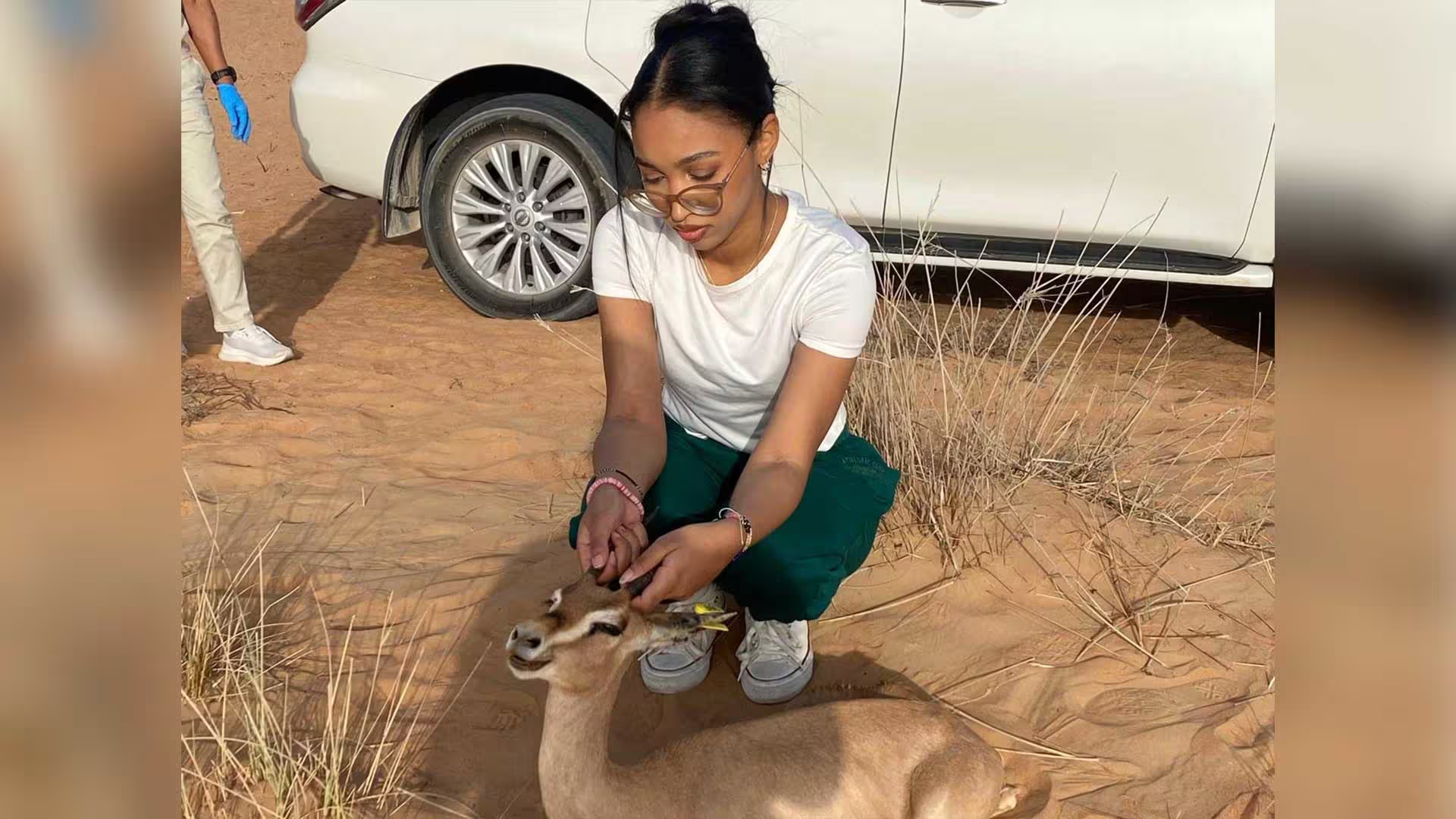
For most biology graduates, the career path is paved with sterile laboratory tiles, white coats and the steady hum of a centrifuge. They are expected to dive into research papers or enroll in master’s programs to study cellular structures or molecular genetics. However, Aisha Al Maskary, an alumna of the American University of Sharjah, traded the microscope for a stethoscope. Instead of a lab, she spends her mornings in a veterinary clinic, where her office mates range from kittens to lions.
Al Maskary is currently in her sixth month of an internship at a veterinary clinic led by her uncle. While a biology degree provides a strong foundation in life sciences, she found that the classroom often leaves a gap when it comes to the practical world of animal medicine.
The intern’s day begins at 8:30 a.m., but the quiet start is deceptive. By 10 a.m., the clinic enters what she calls “rush hour.” This is when handlers and owners bring in a variety of patients, and the air fills with a chorus of barks, meows and the occasional growl.
It is in this mid-morning bustle that her role shifts from observer to participant. Under the watchful eyes of senior doctors, Al Maskary performs swabs, handles blood work and conducts temperature checks.
“The doctors treat it like an inquiry session, asking me to check [animals’] facial structures or ages. It’s a very interactive, hands-on experience,” the intern says.
Al Maskary’s path may seem unusual for a biology major, but for her, it is the fulfillment of an 8-year-old’s dream. Her inspiration didn’t come from a single story, but from a childhood spent in a unique environment.
Because her uncle serves as a veterinarian specializing in exotic species, the intern grew up with up-close exposure to monkeys, lions and tigers. While other children were learning about wildlife from picture books, she was seeing it in the flesh.
“[My uncle] opened my eyes to the fact that there is more than just domestic cats. My 8-year-old brain focused on that more and never let go,” she says.
While the intern considers herself a “cat person,” she sees the beauty of big felines as her love for house cats amplified. But, working with big felines comes with bigger challenges. Al Maskary vividly remembers a moment that tested her determination.
Tasked with drawing blood from a sedated lion, she struggled in her first attempt. Surrounded by senior doctors, the intern’s hands shook, and she accidentally poked her own finger.
Because of the lion’s large anatomy, the intern’s uncle joked, “That vein is as big as your arm!”
The following day, Al Maskary was presented with another lion. She composed herself, steadied her hands and hit the vein on her first try.
“The world felt like it was healing,” she says.
Yet, despite the difference in scale, the emotional weight remains the same. Whether it is a kitten or a lion, the pressure to be perfect is constant.
The hardest part, Al Maskary explains, is the realization that some battles cannot be won. She recalls a recent case of a paralyzed cat that was bright and loving, yet deteriorating beyond help.
“Sometimes, the best way to help is to stop the suffering. Coming to terms with nature’s cruelty is the hardest part of the job,” she says.
These experiences have given the intern a nuanced view of the human-animal bond. Seeing animals suffering from human negligence can be infuriating, yet that anger is balanced by the sight of owners who treat their pets like their children.
As she looks toward the future, Al Maskary is certain of her destination. This internship has served as more than just a filler; it has been a transformative stepping stone.
Where the intern once feared the responsibility of surgery, she now feels a sense of calm and readiness. She plans to apply to veterinary school, confident that the real-world experience she gained in the clinic will set her apart.
For fellow biology majors who feel confined by traditional expectations, Al Maskary’s advice is simple: “Be the voice for the voiceless. Volunteer at shelters, intern at small clinics and don’t give up on moving away from the traditional path. Just seize every opportunity.”