

By Leen Hamati
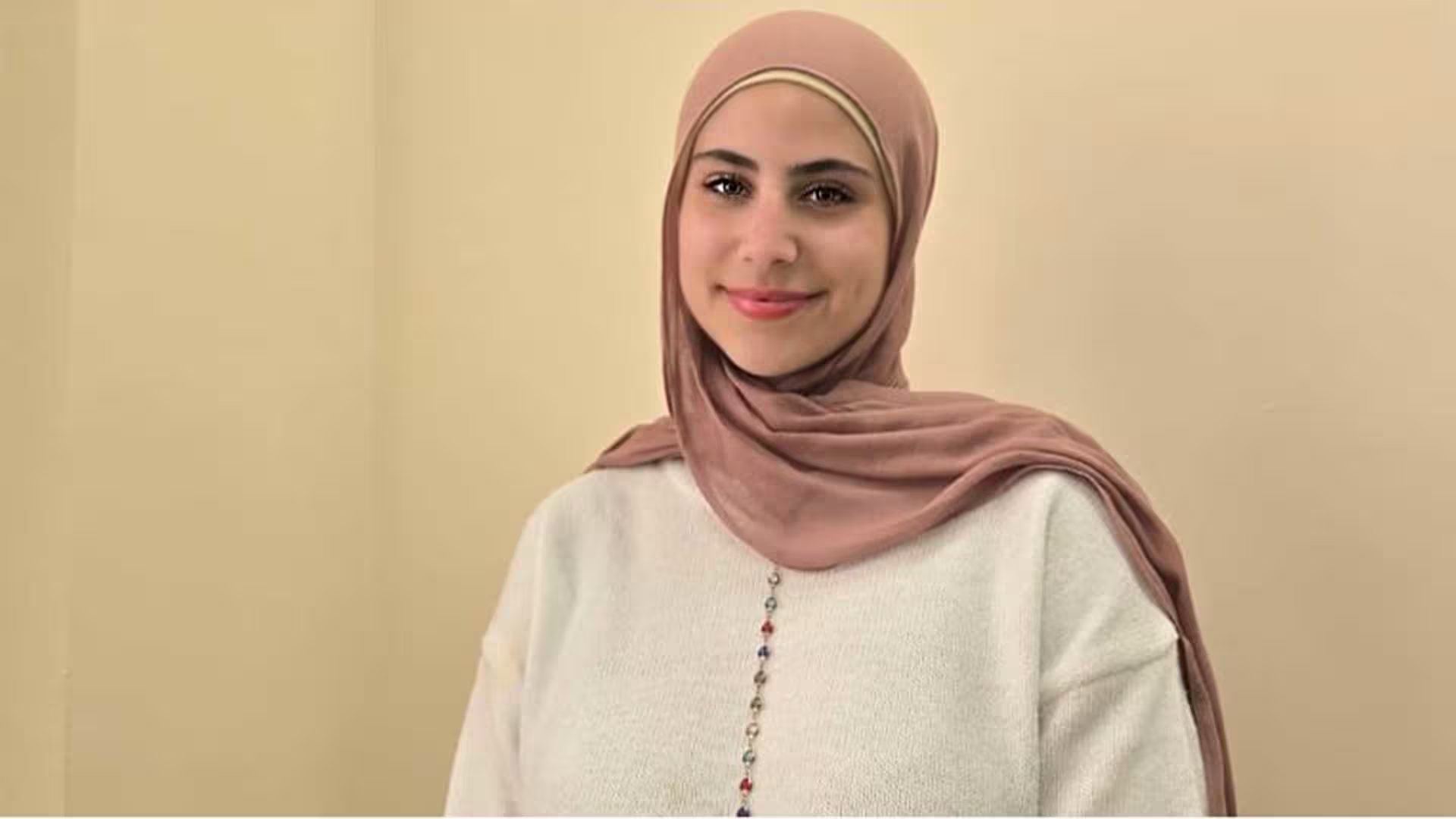
On a sunny afternoon in Brighton, Layan Jandali sat alone at a café overlooking the sea as the waves moved slowly. She remembers staring at the water and thinking, “How is this real? How is this my life?”
For Jandali, a media communications student at the American University of Sharjah, studying abroad was not just an academic decision. It was personal. Borderline urgent, even.
“I love the feeling of unfamiliarity,” she says, her posture straight, her voice steady but animated. “Every once in a while, I need a big change.”
The desire has been building up since high school. She once imagined herself spending four full years abroad, but personal circumstances led her to opt for a semester exchange instead. However, even that came with obstacles. Convincing her parents was not easy. As an Arab woman raised in the UAE/first mention according to AP style, she describes growing up protected, cared for, surrounded and supported by her family who play a central role in daily life.
“You always have your father, your family, or someone taking care of you,” she says. “So, learning how to take care of myself felt important.”
When she had to decide a destination for her exchange program, she ruled out the United States and Canada. They felt too far and too overwhelming for a first experience abroad. Europe seemed more manageable, but language barriers played a role in influencing her choice. The United Kingdom felt like the right balance: English-speaking, culturally diverse and home to a significant Muslim community. Safety also played a major role in her decision.
After researching Brighton online, she chose the University of Sussex.
The first emotional turning point came not when she landed, but when her father left. He stayed with her for the first two days. On the night he flew back home, she sat alone in her dorm room and felt the reality sink in.
But rather than letting her fear follow, it was excitement. The beginning of an adventure she had prayed for since freshman year.
Surprisingly, homesickness never came. Jandali describes herself as someone who adapts quickly. Within a week, she had settled into her routine. Sharing a kitchen with five strangers, which was something completely new to her, became normal. Train rides became routine. Coffee shops became reading spaces. The unfamiliar began to feel structured.
Academically, the adjustment was starker. At AUS, she was used to multiple assignments that build toward a grade. At Sussex, courses were assessed through an assignment worth 100 percent.
“I didn’t like that,” she explains. “It felt stressful having everything depend on one assignment.”
However, she found something she appreciated more: seminars. Each course included both a lecture and a smaller, discussion-based seminar. Those interactive sessions stood out to her.
The social transition, usually one of the most intimidating parts of studying abroad, unfolded more smoothly than she expected. The university organized events specifically for exchange students during the first week, including an event called “speed mates,” similar to speed dating, but designed for friendships.
Within days, she had found her group. “I found my people in the first week,” she says, while also acknowledging that not everyone is as fortunate.
While there were no major issues, small challenges became memorable stories. A spontaneous trip to Scotland turned into an unexpectedly muddy adventure when she slipped while climbing a mountain in white jeans. At the time, it was frustrating. Now, it’s funny and shows how her mindset has changed. Instead of dwelling on inconvenience, she chose to treat it as a future memory.
“I just told myself this would be funny later,” she says.
Her semester abroad also offered quiet self-discovery rather than dramatic transformation.
“When people ask if I changed, they expect something big,” she answers. “But it wasn’t revolutionary.”
Instead, she learned something subtle but powerful: she needs unfamiliarity. Living alone for three and a half months forced her to build routines, friendships and a sense of home entirely on her own. It confirmed that independence was not something to fear.
The distance also sharpened her appreciation for home. Brighton felt safe. But not like the UAE.
“It didn’t feel like real life,” she replies. “It felt like a long-term vacation.”
Now back at AUS, the semester feels both distant and defining. She carries it not as proof of independence, but as confirmation of whom she already was.
“If something is meant for you, it will happen,” she reflects. “No matter how many obstacles.”
Her advice to students considering exchange is simple: Do it.
“This isn’t your permanent life. It’s temporary,” she says. “Don’t let fear stop you.”
For Layan Jandali, unfamiliarity was never something to escape or fear. It was something to chase.